Ancient Silk Road cities once linked Asia, the Middle East, and Europe through vast networks of trade, religion, and cultural exchange. Today, towns such as Samarkand, Kashgar, and Merv still preserve traces of the commercial routes that shaped empires and connected distant civilizations for centuries.
How Silk Road Cities Became Centers of Global Exchange
The Silk Road was never a single road but a network of trade corridors stretching across deserts, mountains, and fertile valleys between East Asia and the Mediterranean world. Along these routes, merchant towns developed into thriving cultural crossroads where traders exchanged silk, spices, ceramics, textiles, metals, and ideas that transformed entire civilizations. Cities such as Samarkand, Kashgar, and Merv became essential stopping points because of their strategic positions between major empires and caravan routes. Over centuries, these settlements absorbed influences from Persian, Chinese, Turkic, Arab, and Mongol cultures, creating urban environments shaped by commerce, diplomacy, and migration. Caravanserais, bazaars, mosques, and fortified walls emerged to support long-distance trade and protect traveling merchants crossing difficult landscapes. Even after the decline of overland trade routes following the rise of maritime commerce, many Silk Road towns retained architectural and cultural features that continue to reflect their historical role as bridges between East and West. Travelers visiting these cities today often encounter a layered atmosphere where ancient commercial history remains visible in urban design, traditional markets, and local customs.
Samarkand, Kashgar, and Merv’s Enduring Historical Identity
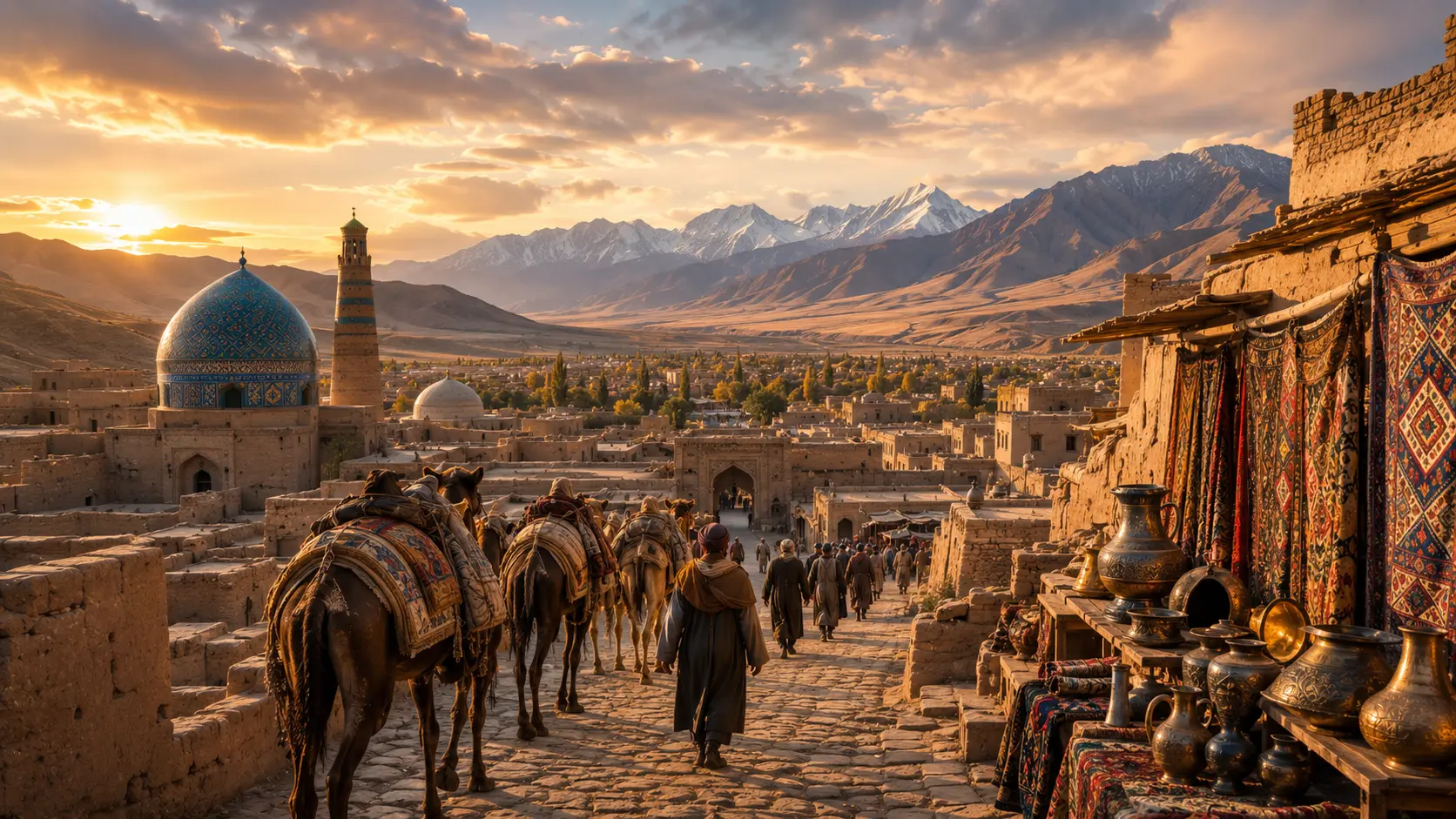
Samarkand, located in present-day Uzbekistan, became one of the Silk Road’s most influential centers under the rule of Timur and earlier Persian dynasties. Its monumental madrasas, tiled courtyards, and grand public squares reflected the wealth generated through centuries of trade and scholarship. In western China, Kashgar developed as a major crossroads where caravans traveling through Central Asia entered routes leading toward the Indian subcontinent and eastern China. The city’s bazaars, narrow alleyways, and traditional courtyard houses still preserve elements of its long commercial history despite modern development surrounding parts of the region. Merv, now an archaeological site in Turkmenistan, once ranked among the most important cities of the medieval Islamic world before repeated invasions and political decline reduced its influence. Its surviving ruins reveal the scale of earlier Silk Road urban centers that depended on caravan trade and sophisticated irrigation systems. Across these locations, travelers encounter architecture and cultural traditions shaped by centuries of movement between distant civilizations. Markets, religious monuments, and fortified settlements continue to demonstrate how trade routes influenced language, cuisine, craftsmanship, and artistic exchange throughout Central Asia.
Walking Through the Landscapes of Ancient Trade
Exploring former Silk Road towns often feels different from visiting conventional historical attractions because many of these cities still function as active cultural and commercial centers. In Samarkand, broad squares and turquoise-domed structures create an urban landscape closely tied to earlier imperial ambitions and scholarly traditions. Kashgar’s older districts preserve crowded markets and workshop streets where merchants continue to sell textiles, spices, and handmade goods in ways that reflect centuries of regional trade practices. Around Merv, expansive desert ruins reveal how vast some Silk Road settlements once became despite their remote surroundings. Caravan routes connecting these cities crossed mountain passes, steppe regions, and arid deserts, forcing travelers to rely heavily on fortified inns and oasis settlements for survival. Modern visitors following parts of these historical routes often experience dramatic changes in geography and climate that help explain the strategic importance of the towns themselves. Unlike many isolated archaeological sites, surviving Silk Road cities retain visible connections between ancient infrastructure and modern community life, creating a stronger sense of historical continuity.
Preservation Challenges Along the Silk Road
Many historic Silk Road towns face increasing pressure from urban expansion, tourism development, and environmental change. Rapid modernization can threaten older neighborhoods, traditional markets, and architectural features that define the historical character of these settlements. In some regions, political tensions and shifting economic priorities also complicate long-term preservation efforts. Archaeological sites such as Merv require ongoing conservation because desert conditions, erosion, and limited restoration resources can damage fragile structures over time. Tourism brings financial support and international attention but may also increase strain on historic districts not designed for large visitor numbers. Governments and cultural organizations across Central Asia have therefore introduced preservation programs focused on protecting monuments, restoring trade-route architecture, and documenting local traditions connected to Silk Road history. Travelers visiting these areas are often encouraged to support local craftspeople, respect conservation rules, and engage with historical sites through guided interpretation rather than purely commercial tourism activities. Maintaining the balance between preservation and modernization remains one of the region’s most significant long-term cultural challenges.
Why the Silk Road Still Matters Today
The surviving towns of the Silk Road remain important because they illustrate how trade networks shaped cultural exchange long before modern globalization emerged. These cities connected distant civilizations through commerce, religion, science, and migration, leaving behind architectural and social legacies that continue to influence Central Asia and beyond. Whether walking through Samarkand’s monumental squares, Kashgar’s historic markets, or the desert ruins of Merv, travelers encounter places where geography and trade transformed local communities into international crossroads. As interest in historical travel and cultural preservation grows, the last Silk Road towns continue to offer insight into the movement of people and ideas that helped shape the ancient world.