Across Europe, a small number of cities still carry the visible marks of political division through walls, checkpoints, buffer zones, and contested neighborhoods. Berlin, Nicosia, and Mitrovica reveal how borders can shape daily urban life long after the conflicts that created them first emerged.
When Political Conflict Divides a City in Two
Most international borders separate countries across mountains, rivers, or remote frontiers, but divided cities place political separation directly inside everyday urban life. In Berlin, Nicosia, and Mitrovica, borders cut through residential districts, commercial centers, schools, and transportation networks, creating cities where history remains physically embedded in the streets themselves. These divisions emerged from very different political circumstances, including Cold War ideology, ethnic conflict, military occupation, and competing national identities. Yet all three cities demonstrate how urban environments can be permanently transformed when political disputes reshape movement, governance, and social interaction. In many cases, generations of residents adapted to living beside checkpoints, military patrols, surveillance systems, and restricted crossings that separated communities sharing the same geography. Even after political conditions changed, traces of division often remained visible through architecture, infrastructure, and public memory. Travelers visiting these cities today encounter places where ordinary routines continue alongside reminders of historical conflict, creating an atmosphere unlike that found in conventional historical destinations or preserved museum districts.
Berlin, Nicosia, and Mitrovica’s Different Histories of Separation
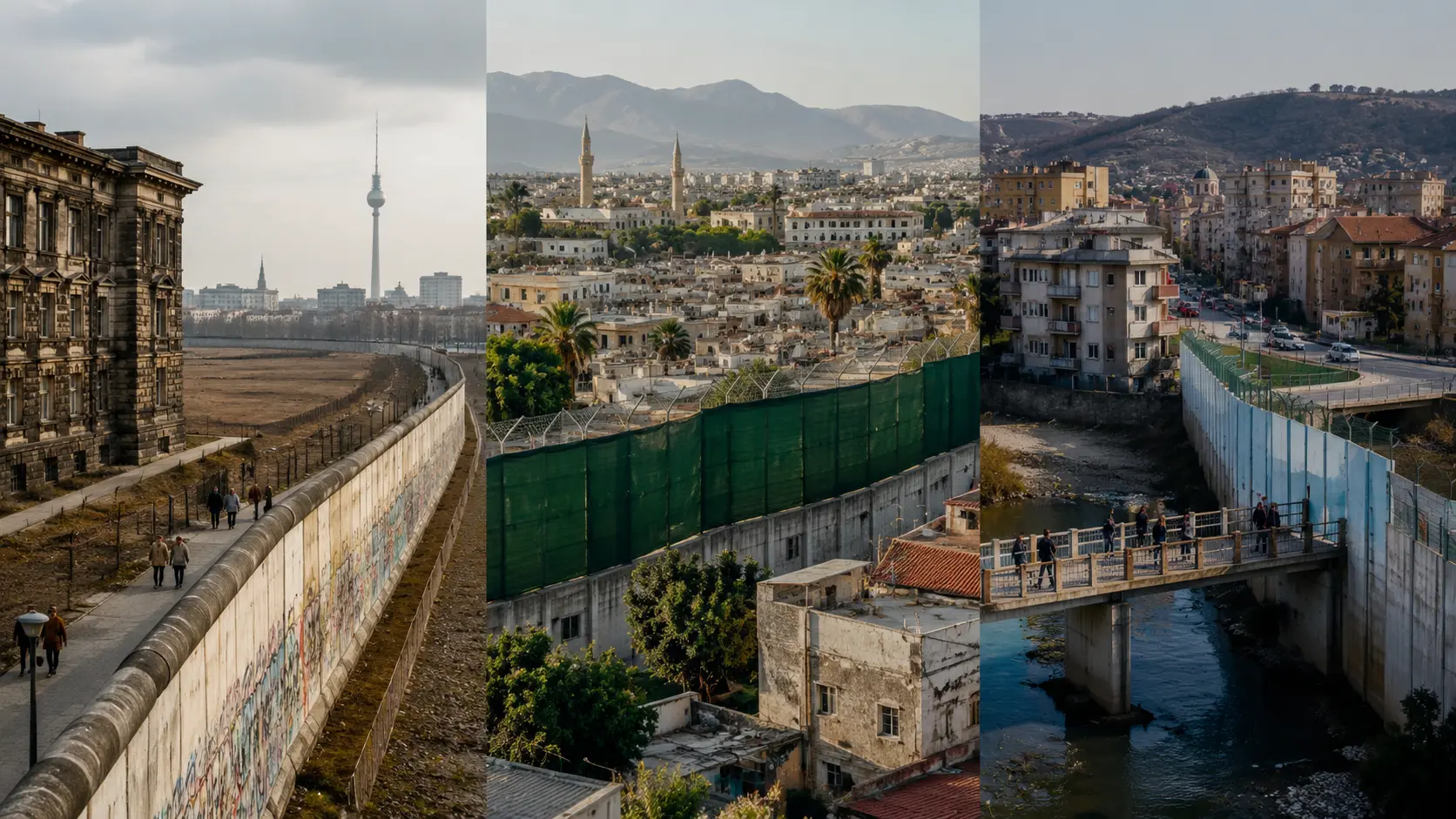
Berlin became the world’s most recognizable divided city during the Cold War after the Berlin Wall separated East and West Berlin from 1961 until 1989. The barrier symbolized the broader ideological conflict between the Soviet bloc and Western Europe, dividing families, neighborhoods, and transportation systems for nearly three decades. Although reunification reshaped the city politically and economically, former border zones and preserved wall sections still reveal how deeply division once structured urban life. Nicosia, the capital of Cyprus, remains Europe’s last officially divided capital city. Since the mid-1970s, the city has been separated by a United Nations buffer zone dividing the Greek Cypriot south from the Turkish Cypriot north. Crossing points now allow controlled movement between both sides, yet abandoned buildings, military barriers, and guarded checkpoints remain visible within the historic center. Mitrovica in Kosovo reflects a more recent form of division linked to ethnic tensions between Serbian and Albanian communities following the Balkan conflicts of the late twentieth century. Bridges, schools, public institutions, and political symbols throughout the city continue to reflect competing identities and contested governance structures.
How Residents Navigate Life Across Divided Spaces
Daily life inside divided cities often involves navigating invisible social boundaries alongside physical checkpoints and political symbols. In Berlin, differences between former East and West districts still appear in architecture, economic development, and public memory despite decades of reunification. In Nicosia, residents and visitors may cross between two administrative systems within minutes, encountering different languages, currencies, and national narratives on opposite sides of the buffer zone. Mitrovica presents a more fragile environment where bridges and public squares carry strong political significance tied to ethnic identity and local security concerns. Yet despite these divisions, residents continue to build routines shaped by work, trade, education, and personal relationships that cross political boundaries in practical ways. Cafes, markets, transportation hubs, and universities often become shared spaces where coexistence develops alongside ongoing tension. Travelers exploring these cities frequently notice how ordinary urban activity unfolds around infrastructure originally built to divide communities. This coexistence of everyday life and unresolved political history creates a distinct atmosphere where the past remains closely connected to contemporary urban experience.
Tourism, Memory, and the Ethics of Divided Landscapes
Divided cities have become important destinations for travelers interested in political history, urban geography, and post-conflict societies. Museums, memorials, preserved checkpoints, and guided tours provide insight into how ideological conflict and ethnic division shaped local communities over time. However, tourism in these environments also raises complex ethical questions because many residents continue living with the political consequences of these divisions today. In Nicosia and Mitrovica especially, unresolved disputes still influence public discourse, diplomatic negotiations, and community relations. Preservation efforts therefore balance historical interpretation with the sensitivities of populations directly affected by conflict and separation. Berlin has transformed many former border areas into memorials and educational sites, although debates about memory and redevelopment remain active within the city. Visitors are often encouraged to engage thoughtfully with these urban landscapes by understanding the perspectives of local communities rather than treating division solely as a spectacle or historical curiosity. These cities are not frozen in time but continue evolving while carrying visible reminders of their fractured histories.
Why Divided Cities Continue to Matter Today
Berlin, Nicosia, and Mitrovica remain globally significant because they demonstrate how political conflict can shape urban life across generations. Their streets, checkpoints, bridges, and neighborhoods preserve evidence of ideological struggles and contested identities that continue influencing modern Europe. For travelers, divided cities provide a direct way to understand how borders affect not only nations but also ordinary daily routines within shared urban spaces. As interest in geopolitical history and cultural tourism grows, these cities continue to offer insight into how communities adapt, coexist, and rebuild while living alongside the physical legacy of division.