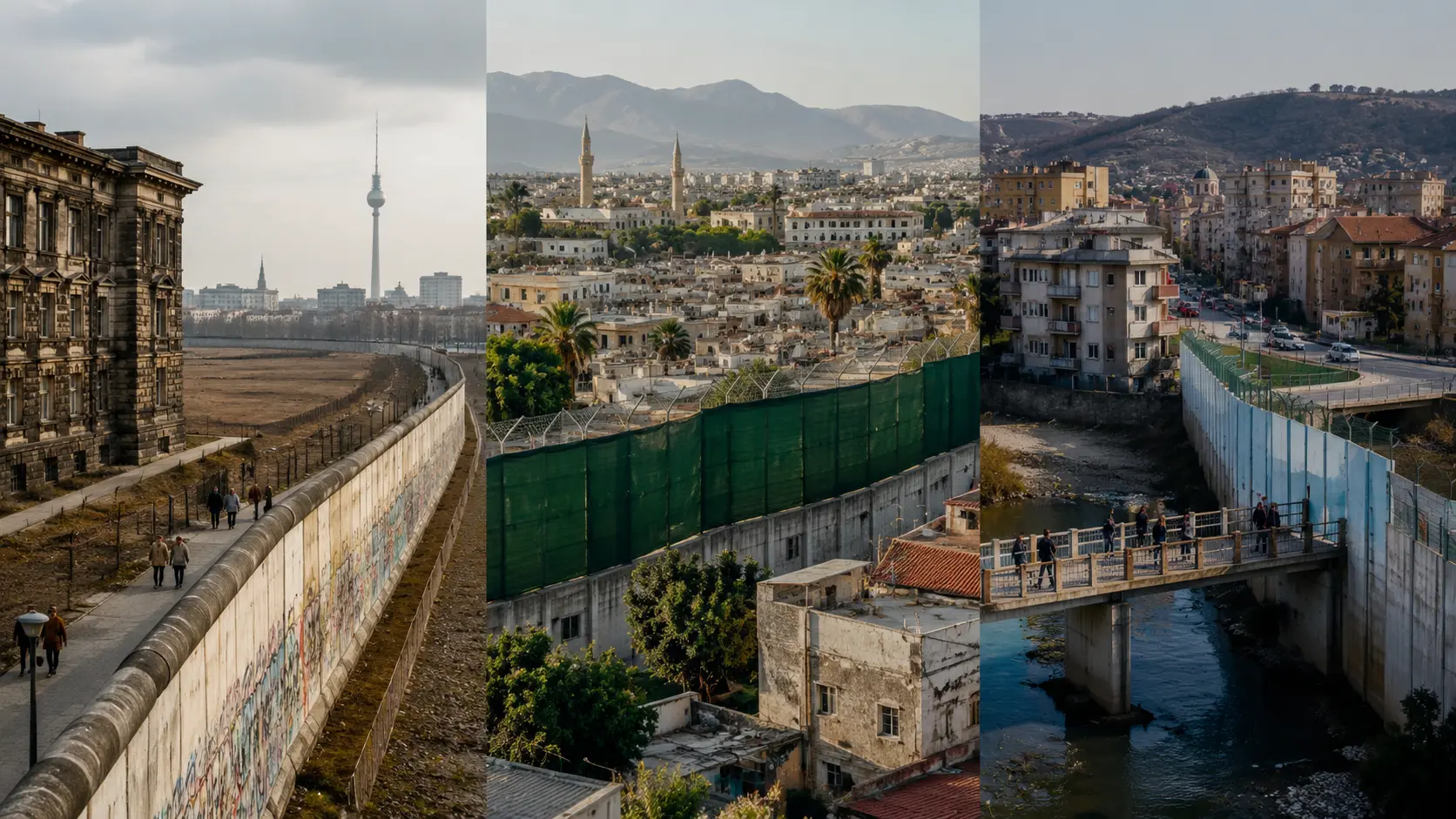
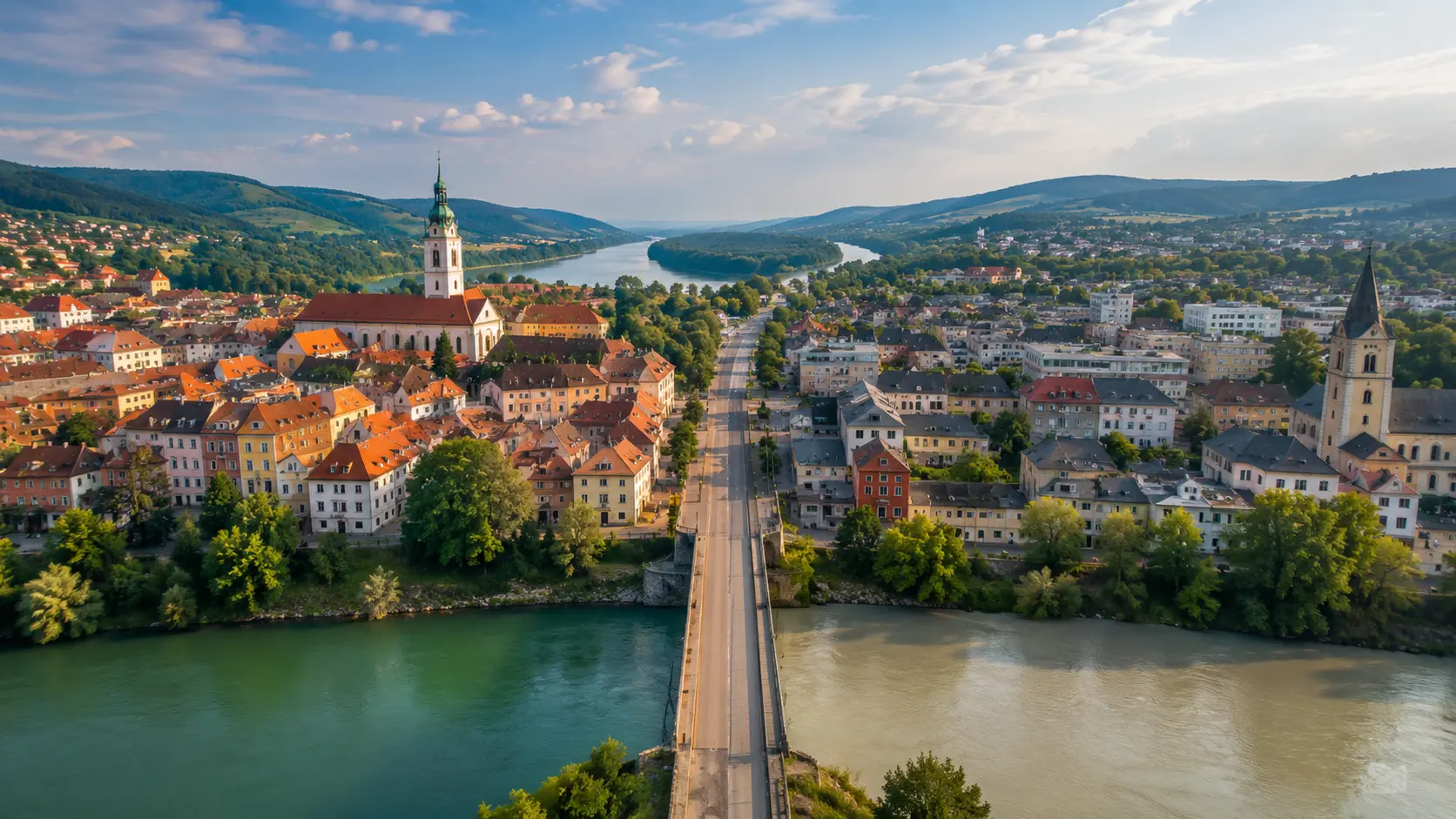
Some towns around the world exist in the unusual position of being split between two countries while still functioning as closely connected communities. From Europe to North America, these twin border cities reveal how geography, politics, and daily life can overlap across international boundaries in unexpected ways.
How International Borders Created Shared Towns
Most national borders separate countries through rivers, mountains, or sparsely populated frontiers, yet in certain places political boundaries cut directly through existing communities. Over time, these divided settlements evolved into “twin towns” where residents live across two countries while continuing to share streets, businesses, culture, and infrastructure. In places such as Baarle-Hertog and Baarle-Nassau, Derby Line and Stanstead, or Valga and Valka, international borders intersect with ordinary urban life in ways that often appear unusual to visitors. Historical treaties, shifting empires, and changing political borders all contributed to the formation of these towns, many of which existed long before modern national boundaries became fixed. Despite belonging to separate states, twin cities frequently maintain close economic and social ties shaped by geography and long-standing local relationships. Travelers are increasingly drawn to these destinations because they reveal how national identity and community life can coexist within highly complex political landscapes where crossing an international border may involve little more than walking across a street or town square.
Baarle, Derby Line, and Valga’s Unusual Geography
The Belgian-Dutch town pair of Baarle-Hertog and Baarle-Nassau is often considered one of the world’s most complex border settlements because of its intricate patchwork of enclaves and counter-enclaves. Border markers pass through roads, restaurants, shops, and even private homes, creating a landscape where buildings can legally belong to different countries depending on the location of their front door. In North America, Derby Line in Vermont and Stanstead in Quebec form another unusual twin community divided by the border between the United States and Canada. The towns share libraries, streets, and historical ties despite increased border security introduced in recent decades. In the Baltic region, Valga in Estonia and Valka in Latvia function as a closely connected urban area shaped by shifting imperial and Soviet-era borders throughout the twentieth century. Since both countries joined the Schengen Area, movement between the two sides has become largely seamless, allowing residents to cross freely for work, shopping, and education. Although each twin town reflects a different historical context, all demonstrate how local communities often adapt to political borders in practical and highly creative ways.
What Daily Life Looks Like in a Border Town
Living inside a twin city often means navigating two legal systems, languages, currencies, or administrative structures within a single urban environment. In some towns, residents may live in one country while working or attending school in another, crossing the border multiple times each day as part of ordinary routines. Shops, restaurants, and public spaces frequently adapt to multilingual and multicultural populations, reflecting the blended identity of the surrounding community. In Baarle, visitors can follow border markers painted directly onto sidewalks and building entrances that indicate transitions between Belgium and the Netherlands. In Derby Line and Stanstead, historical buildings and roads physically connect both countries even though modern security controls now regulate movement more carefully than in the past. Valga and Valka operate almost as a single urban area despite belonging to separate national governments, with many residents moving freely between both sides without visible checkpoints. Travelers often find these towns fascinating because national borders become tangible and highly visible while still allowing daily life to continue with surprising normality and cooperation.
Politics, Cooperation, and Border Challenges
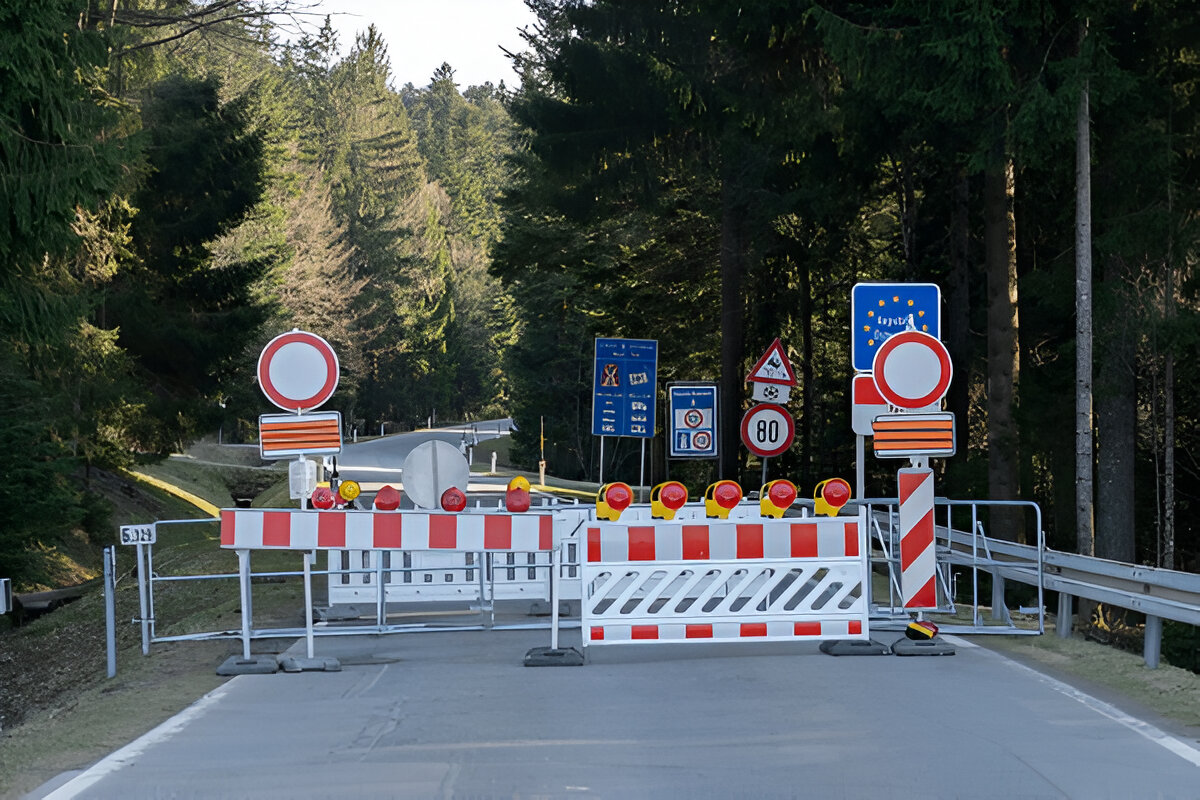
Twin towns often depend heavily on international cooperation because shared infrastructure and closely connected populations require coordination between different national governments and local authorities. Transportation systems, emergency services, taxation policies, and border regulations can all influence how effectively these communities function. Political changes sometimes alter the atmosphere dramatically, especially when new security measures or migration policies affect previously open crossings. Derby Line and Stanstead, for example, experienced major adjustments after increased border controls transformed movement patterns between the United States and Canada. In Europe, the Schengen system has generally made cross-border movement easier for twin towns such as Valga and Valka, though political changes within the European Union can still influence border management practices. Tourism also creates both opportunities and pressures, as visitors are drawn to the novelty of standing in two countries at once or exploring streets divided by invisible lines. Many twin cities therefore balance tourism promotion with the practical realities of maintaining functioning cross-border communities shaped by local cooperation rather than symbolic division alone.
Why Twin Border Towns Continue to Fascinate Travelers
Twin cities across international borders remain compelling destinations because they transform political geography into something visible within ordinary daily life. These communities demonstrate how borders can divide states while still allowing towns, families, and economies to remain closely interconnected. Whether walking through Baarle’s maze of enclaves, crossing between Canada and the United States in Derby Line, or moving freely between Estonia and Latvia in Valga and Valka, travelers encounter places where national boundaries become part of the urban landscape itself. As interest in geopolitical and cultural travel continues to expand, twin border towns offer a distinctive way to explore how communities adapt to living between two countries at the same time.