Arctic destinations experience some of the world’s most unusual seasonal light cycles, where the sun may remain visible for weeks or disappear entirely below the horizon. In places such as Tromsø and Svalbard, extreme daylight shapes travel, daily routines, and the atmosphere of the surrounding landscape.
How Extreme Daylight Defines Life Above the Arctic Circle
In Arctic regions north of the polar circle, seasonal daylight behaves in ways unfamiliar to most travelers. During summer, the midnight sun keeps the landscape illuminated deep into the night, while winter brings the polar night, a prolonged period when the sun never rises above the horizon. These dramatic light cycles shape everything from transportation schedules and wildlife behavior to tourism patterns and local culture. In Norway’s northern regions and the remote archipelago of Svalbard, entire communities adapt their routines around changing daylight rather than conventional concepts of day and night. Travelers visiting these destinations often discover that the atmosphere feels fundamentally different from lower latitudes because time becomes visually disconnected from darkness or sunrise. The Arctic environment appears constantly active during summer months, while winter creates long periods of twilight and darkness that transform the surrounding landscape into something quieter and more isolated. Rather than being viewed as obstacles, both the midnight sun and polar night have become defining features of Arctic tourism, attracting visitors seeking experiences shaped directly by geography and seasonal extremes.
Tromsø’s Endless Summer Light and Svalbard’s Winter Darkness
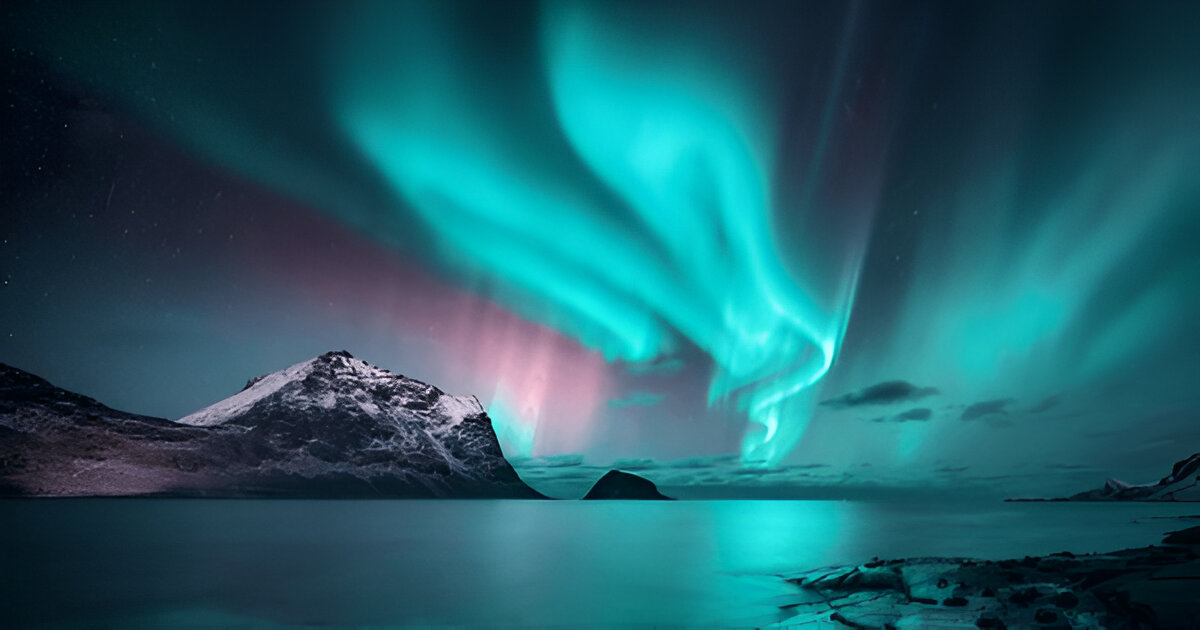
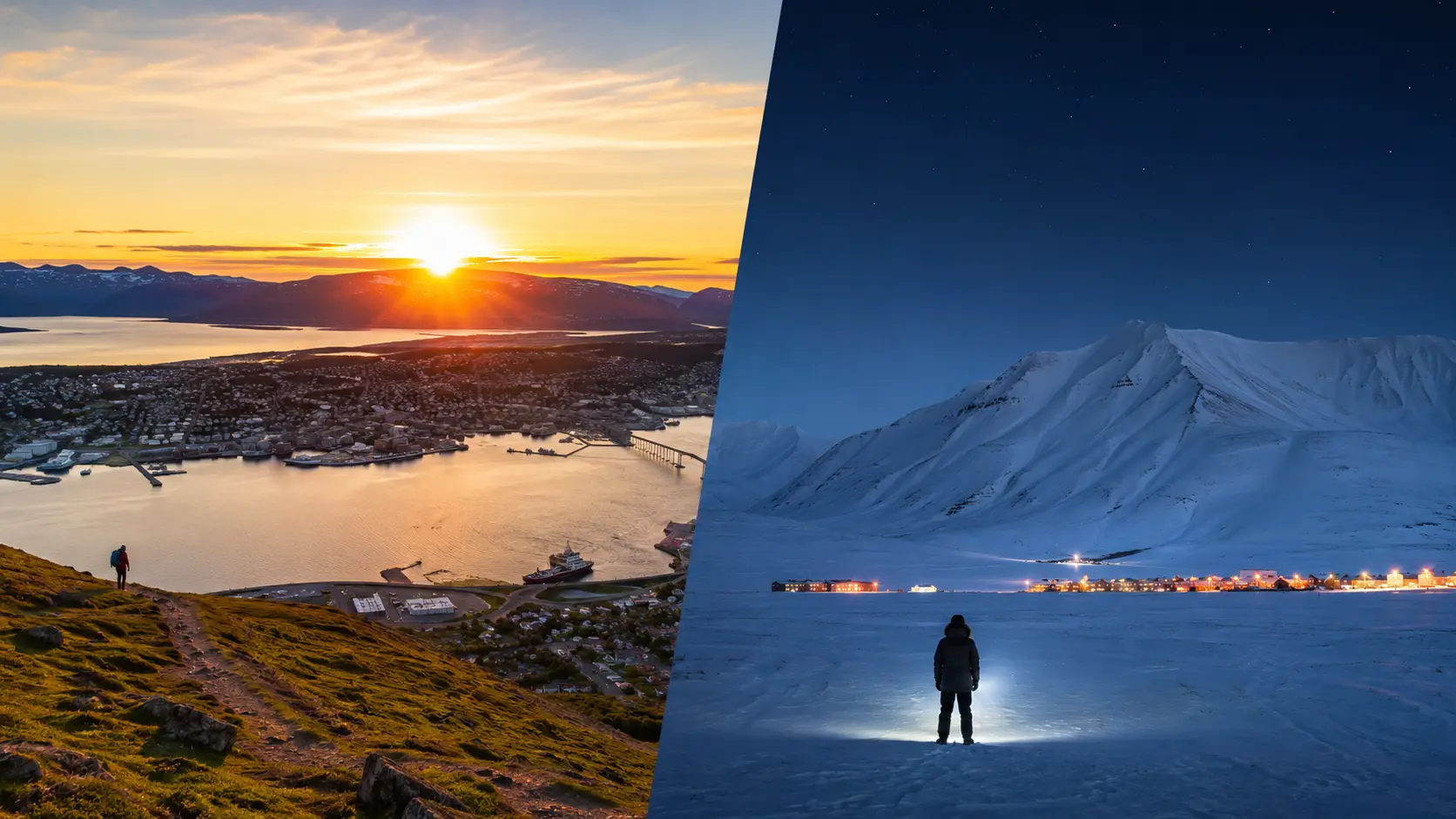
Tromsø, located in northern Norway above the Arctic Circle, is one of the world’s most accessible destinations for experiencing the midnight sun. During late spring and summer, daylight remains visible around the clock, creating evenings where mountains, harbors, and coastal waters stay brightly illuminated long after midnight. Hiking, kayaking, and outdoor festivals often continue through hours traditionally associated with nighttime because the landscape never fully darkens. In contrast, Svalbard experiences one of the world’s most dramatic examples of polar night during winter months. For extended periods, the sun remains entirely below the horizon, leaving the archipelago in continuous darkness or dim blue twilight depending on the season. Despite the absence of daylight, life continues through snowmobile travel, research activity, and winter tourism focused on Arctic scenery, wildlife, and northern lights observation. Both destinations demonstrate how seasonal light shapes daily rhythms and emotional atmosphere in completely different ways. Travelers visiting Tromsø during summer encounter an energetic and highly active environment, while winter in Svalbard emphasizes silence, isolation, and the scale of the Arctic wilderness.
What Extreme Daylight Feels Like for Travelers
Experiencing continuous daylight or prolonged darkness can significantly alter a traveler’s perception of time and environment. Under the midnight sun, visitors often remain active far later than usual because bright skies make evenings feel almost indistinguishable from afternoon hours. Outdoor activities may continue through the night, and many travelers describe feeling unusually energized during Arctic summer because darkness never signals the end of the day. In contrast, the polar night creates a more introspective atmosphere where artificial lighting, snow reflections, and twilight tones shape daily life. Rather than complete blackness, many Arctic winter destinations experience subtle variations of blue and purple light during midday hours before darkness returns. Weather conditions also influence the emotional experience of both seasons. Summer fog, shifting clouds, and reflective coastal waters intensify the surreal quality of continuous daylight, while winter storms and snow-covered landscapes heighten the sense of remoteness during the polar night. Travelers frequently describe Arctic light cycles as psychologically immersive because the environment itself reshapes ordinary expectations about time, sleep, and movement.
Planning and Practical Challenges in the Arctic
Travel in Arctic regions requires careful planning because extreme daylight conditions are closely tied to seasonal weather and infrastructure limitations. Winter travel in places such as Svalbard involves cold temperatures, snow conditions, and reduced daylight visibility that can affect outdoor activities and transportation schedules. During the polar night, certain remote areas may require guided travel because of weather risks and wildlife safety regulations. In summer, continuous daylight can disrupt sleep patterns for travelers unfamiliar with the midnight sun, making eye masks and flexible schedules especially useful. Accommodation demand also fluctuates heavily according to seasonal tourism peaks linked to northern lights viewing or summer outdoor activities. Arctic weather remains highly changeable throughout the year, with strong winds, snow, fog, and coastal storms influencing transportation by air and sea. Despite these challenges, local communities have developed infrastructure and tourism systems specifically adapted to extreme seasonal conditions. Visitors willing to prepare for the environment often find that Arctic light cycles create some of the most visually and emotionally distinctive travel experiences available anywhere in the world.
Why Extreme Daylight Continues to Define Arctic Tourism
The midnight sun and the polar night remain central to Arctic travel because they transform ordinary landscapes into environments shaped by unusual seasonal rhythms and atmospheric extremes. In Tromsø, endless summer daylight creates an almost continuous sense of movement and activity, while Svalbard’s winter darkness emphasizes silence, scale, and isolation within the high Arctic wilderness. These contrasting experiences reveal how geography and seasonal light influence not only tourism but also the culture and daily routines of northern communities. As interest in remote and climate-focused travel continues to expand, Arctic destinations increasingly attract visitors seeking to experience forms of daylight and darkness found nowhere else on Earth.