Once associated primarily with Japan’s business districts, capsule hotels have evolved into a global style of micro-accommodation focused on efficiency, privacy, and modern design. Today’s designer pods blend compact living with architecture, technology, and hospitality innovation in major cities worldwide.
How Capsule Hotels Evolved Beyond Their Japanese Origins
Capsule hotels first emerged in Japan during the late twentieth century as highly efficient accommodations designed for urban workers and overnight commuters. Their original purpose centered on practicality, offering compact sleeping spaces in dense city environments where convenience and affordability were prioritized over spacious rooms. Over time, however, the capsule concept evolved far beyond its functional beginnings. Across cities such as Tokyo, Amsterdam, and New York, modern micro-accommodations now combine minimalist architecture, digital technology, and boutique hospitality into a new generation of compact urban lodging. Contemporary capsule hotels often feature carefully designed sleeping pods equipped with climate controls, ambient lighting, charging stations, and sound insulation while maintaining the efficient use of space that defined the original concept. Rather than serving solely as budget accommodation, many designer capsule properties now appeal to travelers interested in modern aesthetics, sustainability, and highly curated city experiences. This transformation has turned capsule hotels into a recognizable global hospitality trend shaped by changing travel habits and growing interest in compact living environments.
Tokyo, Amsterdam, and New York’s Approach to Pod Hospitality
Tokyo remains the international center of capsule hotel culture, where traditional business-oriented capsules now exist alongside architect-designed pod accommodations aimed at tourists, remote workers, and younger travelers. Many Tokyo properties incorporate sleek interiors, wellness facilities, and advanced automation systems that reflect Japan’s broader reputation for precision and efficiency. In Amsterdam, capsule-style accommodations have developed through a more experimental design perspective, often combining industrial architecture with compact modular sleeping spaces integrated into creative urban environments. Dutch micro-hotels frequently emphasize sustainability, shared social spaces, and minimalist European interiors that differ from the more structured atmosphere of traditional Japanese capsule lodging. New York has adopted the concept through space-conscious hospitality models tailored to one of the world’s most expensive hotel markets. Pod hotels and compact sleeping suites in Manhattan and Brooklyn often focus on maximizing functionality while preserving access to central neighborhoods that might otherwise remain financially inaccessible to many travelers. Across all three cities, capsule-inspired accommodations reflect local architectural culture while responding to increasing urban density and demand for flexible short-term stays.
What Staying in a Modern Capsule Hotel Feels Like
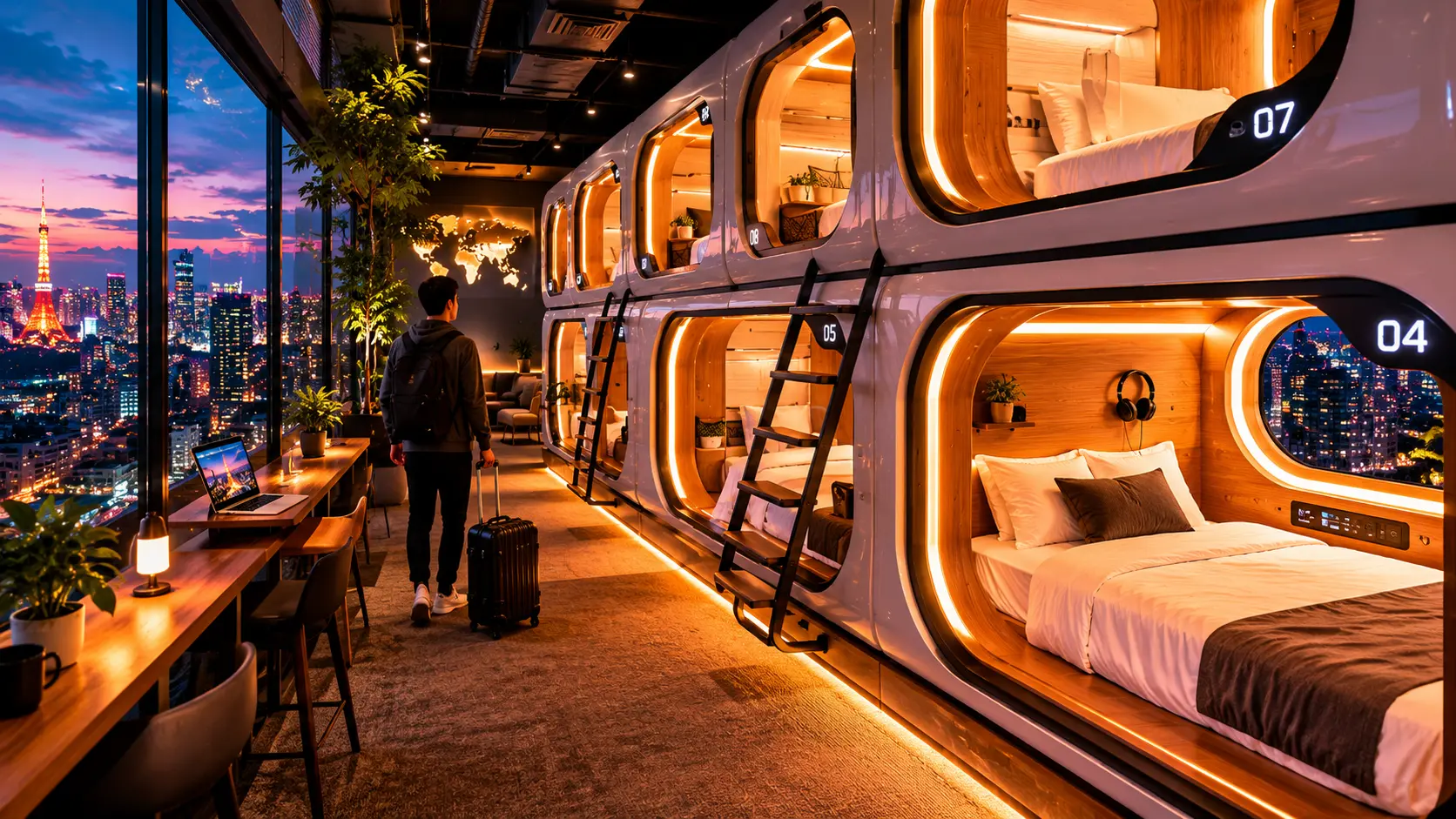
Modern capsule accommodations differ significantly from the narrow and purely utilitarian pods often associated with early capsule hotels. Contemporary designs emphasize privacy, comfort, and technology through carefully engineered sleeping environments that feel more like compact personal suites than temporary bunk spaces. Many capsules include adjustable lighting systems, ventilation controls, entertainment screens, secure storage areas, and acoustic materials designed to reduce noise from surrounding guests. Shared spaces frequently play an important role in the overall experience, with lounges, coworking areas, cafes, and wellness facilities balancing the intentionally compact nature of the sleeping pods themselves. In some designer properties, capsules are arranged around artistic interiors, curated music environments, or architectural themes that create a boutique atmosphere despite the limited room dimensions. Travelers often describe capsule hotels as efficient rather than restrictive because the design focuses on simplifying movement and eliminating unnecessary space. This approach appeals particularly to solo travelers, short-stay visitors, and urban tourists who prioritize location and functionality over traditional hotel room layouts.
Important Considerations Before Booking a Capsule Stay
Although modern capsule hotels have become more sophisticated, they still operate differently from conventional accommodations and may not suit every traveler. Privacy levels vary between properties, with some pods fully enclosed while others use partial partitions or curtain-style entrances. Shared bathrooms and communal facilities remain common, although many higher-end capsule hotels now provide upgraded amenities and separate areas based on guest preferences. Storage capacity is typically limited inside the pods themselves, making larger luggage storage areas an important feature to confirm before arrival. Travelers sensitive to sound or confined spaces may also need to consider the compact dimensions and communal environment associated with capsule lodging. In busy urban centers, capsule hotels are often designed for short stays rather than extended vacations, although newer properties increasingly cater to digital nomads and remote workers through coworking facilities and longer-term booking options. Many operators emphasize sustainability as well, using compact architectural footprints and energy-efficient systems to reduce operational impact within densely populated cities.
Why Micro-Accommodation Continues to Expand Globally
The growing popularity of capsule hotels reflects broader changes in urban travel, architecture, and hospitality design. Travelers increasingly seek accommodations that prioritize location, efficiency, and distinctive experiences over large private rooms and traditional hotel structures. From Tokyo’s technologically advanced capsules to Amsterdam’s design-focused pods and New York’s compact urban suites, micro-accommodation has evolved into a flexible hospitality model suited to modern city travel. As urban populations grow and hospitality spaces become more space-conscious, capsule hotels continue to demonstrate how compact environments can be adapted into comfortable and highly functional overnight experiences without sacrificing design or atmosphere.