Across Eastern Europe, former Cold War infrastructure has become a growing focus of historical tourism. Abandoned bunkers, Soviet monuments, border checkpoints, and underground command centers now offer travelers a direct look into the political tensions and military systems that shaped much of the twentieth century.
Why Cold War Sites Have Become Major Travel Destinations
Decades after the collapse of the Soviet Union and the end of the Iron Curtain, many countries in Eastern Europe have transformed Cold War remnants into museums, memorials, and immersive historical attractions. Structures once built for secrecy and military defense now attract visitors interested in political history, architecture, and the social realities of a divided Europe. Across Poland, the Czech Republic, Hungary, Romania, and the Baltic states, former surveillance centers, nuclear bunkers, border fortifications, and propaganda monuments remain visible reminders of a period defined by ideological conflict and geopolitical tension. Unlike traditional war memorials focused primarily on military victory, Cold War tourism often explores everyday life under surveillance systems, state-controlled economies, and heavily militarized borders. Travelers are increasingly drawn to these locations because they provide physical access to environments that shaped global politics during much of the twentieth century. Underground shelters, preserved apartments, abandoned factories, and border checkpoints create a historical atmosphere that feels unusually immediate because many of these sites remained active until relatively recently.
Eastern Europe’s Most Recognizable Cold War Landmarks
Berlin remains one of the most internationally recognized Cold War destinations because of its preserved sections of the Berlin Wall, former checkpoint crossings, and museums documenting the division between East and West Germany. Beyond Germany, however, Eastern Europe contains a wide range of lesser-known but highly significant Cold War sites. In Poland, underground military complexes and Soviet-era command bunkers hidden within forests reveal the scale of military planning during the nuclear age. Hungary’s former air raid shelters and secret hospitals beneath Budapest now operate as museums dedicated to wartime and Cold War history. Romania preserves massive parliamentary architecture and state buildings associated with the communist era, while the Baltic states contain former Soviet naval bases and prison facilities connected to political repression. In the Czech Republic and Slovakia, visitors can explore bunkers and border fortifications built along former Iron Curtain frontiers designed to prevent movement between Eastern and Western Europe. Many of these locations preserve original communication equipment, surveillance systems, and military interiors, allowing travelers to experience the physical infrastructure of a politically divided continent.
What Visiting Cold War Sites Feels Like
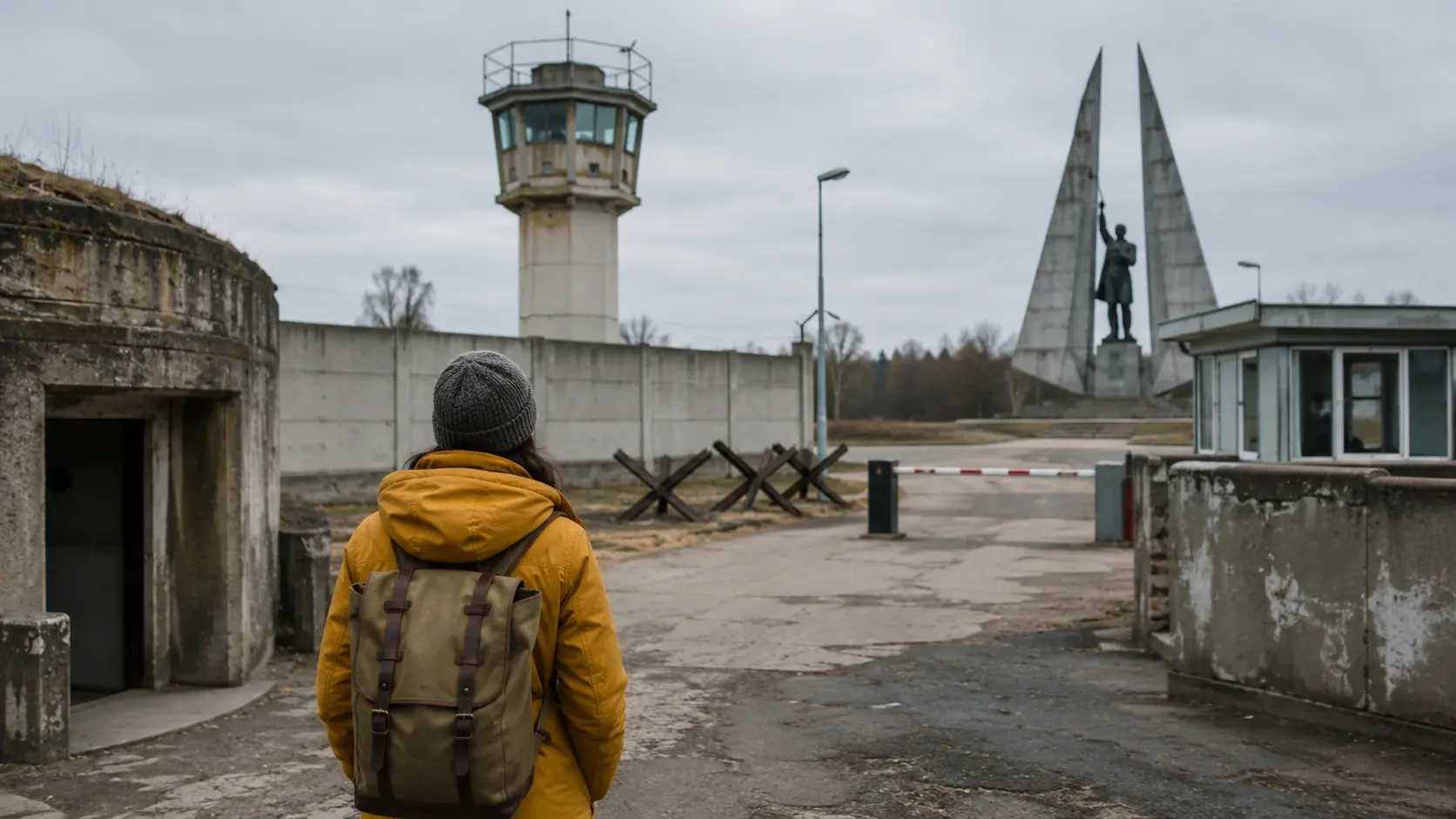
Cold War tourism differs from many forms of historical travel because the sites often preserve an atmosphere of tension, secrecy, and isolation rather than grand public symbolism. Underground bunkers, concrete watchtowers, and heavily reinforced corridors create environments designed for survival, surveillance, and military control rather than civic life. Many museums intentionally retain original furnishings, communication equipment, warning signs, and propaganda materials in order to recreate the psychological environment of the era. In former border zones, visitors may walk along fenced corridors, abandoned patrol roads, and observation towers once used to monitor movement across the Iron Curtain. Guided tours frequently emphasize personal stories from civilians, defectors, soldiers, and political prisoners whose experiences shaped everyday life during the Cold War. In cities such as Budapest and Berlin, Soviet-era monuments and apartment blocks remain integrated into the modern urban landscape, creating visible contrasts between contemporary Europe and remnants of its divided past. Travelers often describe these visits as immersive because the architecture itself communicates the anxiety, control, and uncertainty associated with decades of geopolitical conflict.
Preservation, Politics, and Ethical Considerations
Cold War tourism presents unique preservation challenges because many sites remain politically sensitive and historically contested. Different countries interpret the Soviet period in contrasting ways depending on local experiences with occupation, resistance movements, and political transition after communism. Some monuments and statues have been relocated to museums or memorial parks, while others remain active points of public debate regarding national identity and historical memory. Preserving underground bunkers, industrial facilities, and border infrastructure also requires significant maintenance because many structures were never intended for long-term public access. Tourism can provide financial support for conservation, but it also raises concerns about commercializing traumatic historical experiences connected to surveillance, imprisonment, and political repression. Museums and heritage organizations increasingly focus on educational interpretation rather than nostalgia, encouraging visitors to understand the broader social and political consequences of the Cold War period. Travelers exploring these sites are often encouraged to approach them as historical spaces tied to real human experiences rather than purely entertainment-oriented attractions.
Why Cold War Tourism Continues to Expand
Interest in Cold War tourism continues to grow because the era remains close enough to modern history that its political and cultural impact still shapes contemporary society. The preserved infrastructure of divided Europe offers travelers an opportunity to engage directly with historical environments that influenced international relations, surveillance systems, and daily civilian life for decades. Whether descending into underground bunkers in Poland or walking former checkpoint crossings in Berlin, visitors encounter physical reminders of how ideology and geopolitical rivalry transformed entire landscapes. As Eastern Europe continues preserving and interpreting these locations, Cold War tourism has emerged as one of the region’s most distinctive forms of historical travel.